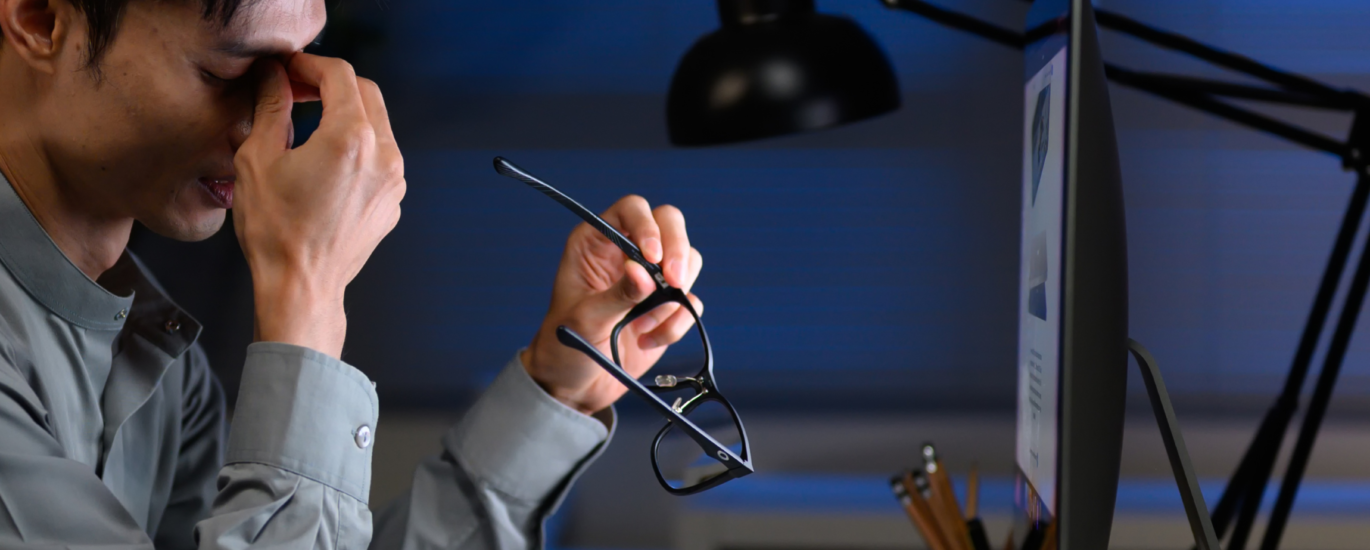
When Screens Become Part of Everyday Vision
From morning emails to late-night scrolling, screens have become inseparable from daily life. Whether for work, education, or entertainment, many people spend hours focusing on digital devices without realizing the strain of these places on their eyes.
What often begins with mild discomfort, tired eyes, dryness, or headaches can gradually evolve into persistent visual fatigue. This cluster of symptoms is commonly known as digital eye strain or computer vision syndrome.
While screen use is unavoidable, understanding its impact on eye health is essential.
Why Digital Devices Affect the Eyes
Human eyes are designed for dynamic viewing, shifting focus between distances, blinking regularly, and interacting with natural environments. Digital screens alter this behavior.
During prolonged screen use:
- Blink rate reduces significantly
- Continuous near focusing increases muscle fatigue
- Glare and contrast demand extra visual effort
- Poor posture contributes to overall strain
Over time, these factors combine to create noticeable discomfort and visual fatigue.
Recognizing the Symptoms
Digital eye strain presents differently for each individual but commonly includes:
- Tired or heavy eyes
- Burning or dryness
- Blurred or fluctuating vision
- Headaches after screen use
- Neck and shoulder discomfort
- Increased watering
Many people assume these symptoms are temporary, yet repeated exposure without preventive measures can worsen discomfort.
Who Is Most at Risk?
Digital eye strain can affect individuals of all ages, but certain groups are more vulnerable:
- Office professionals with prolonged computer work
- Students engaged in online learning
- Individuals using multiple devices simultaneously
- Contact lens users
- People with underlying dry eye tendencies
As digital dependency continues to grow, awareness becomes increasingly important.
Practical Ways to Reduce Digital Eye Strain
Fortunately, small adjustments can significantly improve comfort.
Helpful strategies include:
- Following the 20-20-20 rule (look 20 feet away every 20 minutes)
- Maintaining proper screen distance and height
- Adjusting brightness and contrast
- Minimizing glare with proper lighting
- Blinking consciously and taking short breaks
- Using lubricating eye drops if advised
These habits help restore natural visual behavior and reduce fatigue.
When Should You Seek Professional Advice?
If symptoms persist despite lifestyle adjustments, an eye examination may be beneficial.
Evaluation can identify:
- Uncorrected refractive errors
- Dry eye disease
- Binocular vision problems
- Ergonomic factors affecting visual comfort
Targeted management often leads to noticeable improvement in daily productivity and comfort.
Beyond Comfort — Protecting Long-Term Visual Wellness
Digital eye strain is typically not vision-threatening, but chronic discomfort can affect concentration, efficiency, and quality of life.
Recognizing symptoms early and adopting preventive habits helps maintain comfortable screen use without compromising eye health.
In a world driven by digital interaction, caring for your eyes is no longer optional it is essential.
Final Thoughts
Screens are here to stay, but digital discomfort doesn’t have to be.
With awareness, simple behavioral changes, and timely professional guidance, individuals can continue benefiting from technology while preserving visual comfort and productivity.
Because healthy vision should support your digital life not struggle within it.